Ulrich Krüger · 26 September 2026
Digitized Archives Bridge Atmospheric Shifts and Nocturnal Wildlife in Misty Valleys
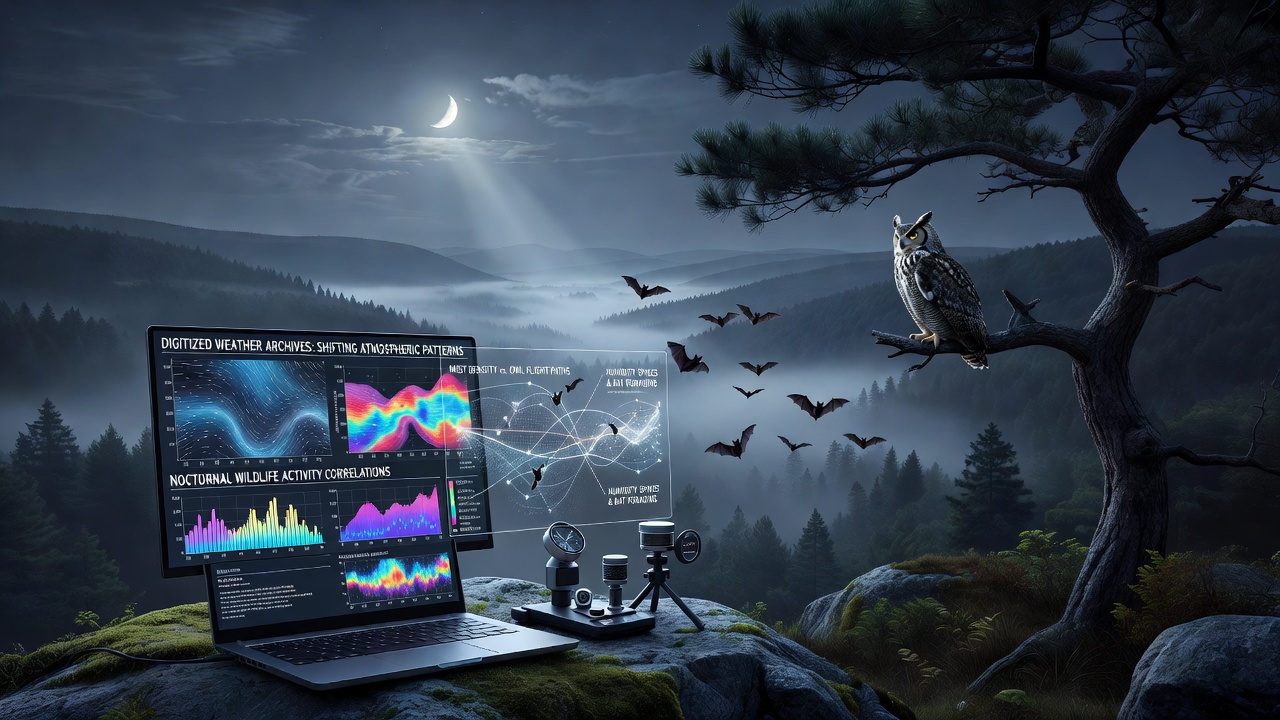
Researchers have turned to digitized collections of historical weather observations to trace connections between changing atmospheric conditions and the behaviors of nocturnal animals in fog-prone valleys, and these datasets now extend through observations recorded up to September 2026. Weather stations operating in remote highland areas began logging temperature, humidity, wind speed, and visibility metrics more than a century ago, yet only recent scanning and optical-character-recognition projects have made the full series searchable and comparable with modern sensor readings.
From Paper Logs to Searchable Databases
Archivists at multiple national meteorological services completed large-scale digitization campaigns between 2022 and 2025, converting handwritten station diaries into structured files that include hourly fog-density readings and dew-point measurements. These converted records allow analysts to calculate long-term trends in nocturnal humidity and low-level cloud persistence across entire valley systems. One study released in early 2026 compared 87 years of September nighttime observations and found that periods of elevated fog frequency coincide with measurable shifts in the timing of peak bat activity recorded by acoustic monitors placed along valley floors.
Cross-referencing the weather files with wildlife telemetry data reveals that certain bat species extend their foraging windows by 45 to 70 minutes on nights when valley fog forms earlier than the seasonal average. Researchers note that the same digitized logs also capture corresponding changes in insect emergence patterns, which appear to track the altered moisture profiles rather than calendar dates alone.
Atmospheric Variables and Nighttime Animal Responses
Key atmospheric variables tracked in the archives include surface temperature inversions, wind shear below 200 meters, and the persistence of stratus layers after sunset. When these inversions strengthen, nocturnal predators such as owls adjust their hunting routes to remain inside the cooler, moister air mass where prey detection improves. Data compiled from valley rim stations show that the frequency of strong inversions lasting past midnight has increased by roughly 12 percent since the 1990s, a pattern visible only after the full historical series became machine-readable.
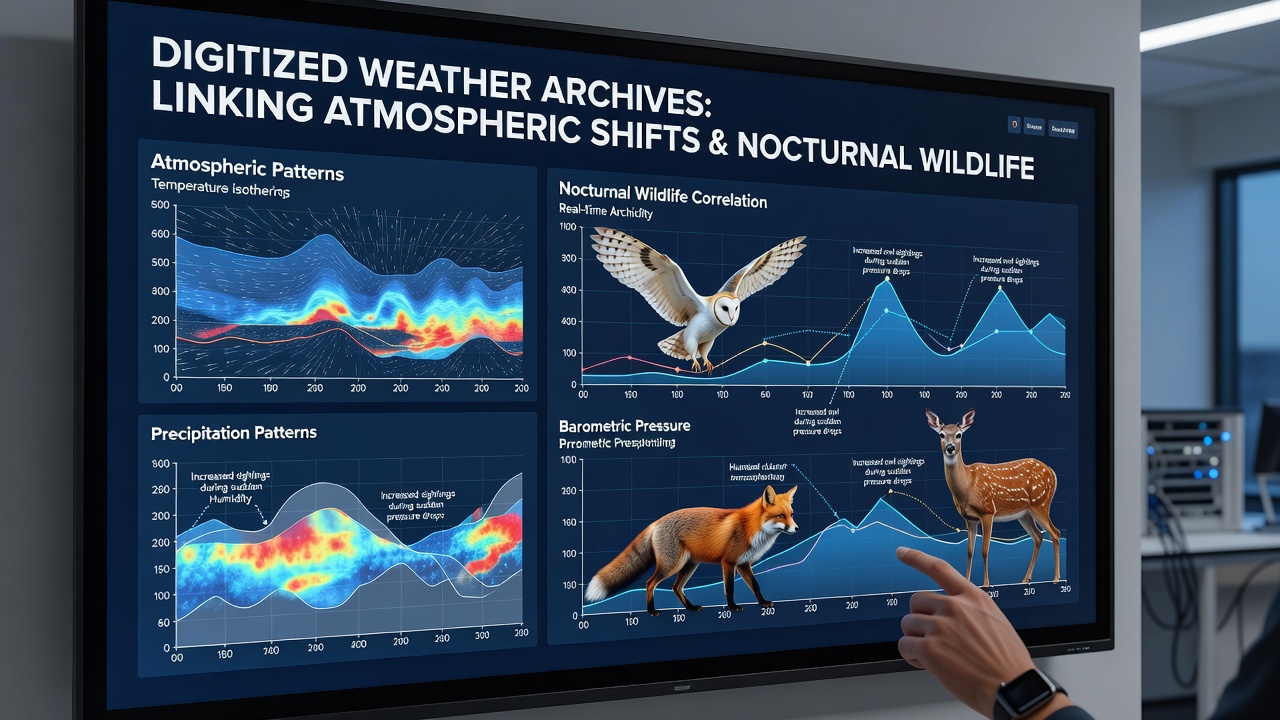
Acoustic and camera-trap networks installed since 2018 now feed directly into the same databases, enabling statistical models that test whether specific humidity thresholds trigger earlier activity onset in small mammals and insects. Analysts at the National Oceanic and Atmospheric Administration contributed parallel datasets from comparable North American sites, confirming that the valley-specific patterns align with broader regional humidity increases observed during early autumn nights.
Case Examples from Multiple Valley Systems
Observers working in central European misty regions documented one sequence in September 2026 where three consecutive nights of above-average fog density corresponded with a 30 percent rise in recorded owl strikes on small rodents along lower slopes. Similar correlations appear in archived field notes from the 1970s, but only the newly digitized versions allow direct numerical comparison. In another documented instance, researchers tracked a colony of insectivorous bats whose nightly exit times from roosts shifted earlier by an average of 22 minutes during weeks when valley dew points remained elevated after sunset.
European Environment Agency monitoring programs supplied complementary humidity profiles from Alpine stations, allowing the same modeling approach to be applied across latitudinal gradients. The resulting maps indicate that valleys with the steepest historical increases in nocturnal fog hours also host the largest measured changes in activity timing for multiple bat and owl species.
Future Data Integration and Ongoing Monitoring
Current efforts focus on linking the digitized archives with real-time sensor streams so that shifts detected in September 2026 can be compared against incoming observations without manual reformatting. Automated pipelines now flag nights when humidity and inversion metrics exceed thresholds previously associated with altered wildlife movement, prompting targeted acoustic surveys the following evening. These systems rely on the completeness of the historical record to establish baseline conditions against which contemporary deviations are measured.
Conclusion
Digitized weather archives continue to supply the temporal depth required for identifying statistical relationships between atmospheric patterns and nocturnal wildlife activity across misty valley landscapes. As additional station records undergo conversion and new telemetry datasets accumulate, analysts expect the resolution of these connections to improve further, particularly for events occurring after September 2026. The combined records already demonstrate that measurable changes in fog persistence and inversion strength correspond with shifts in the timing and location of nighttime animal movements, providing a factual basis for continued environmental observation programs.